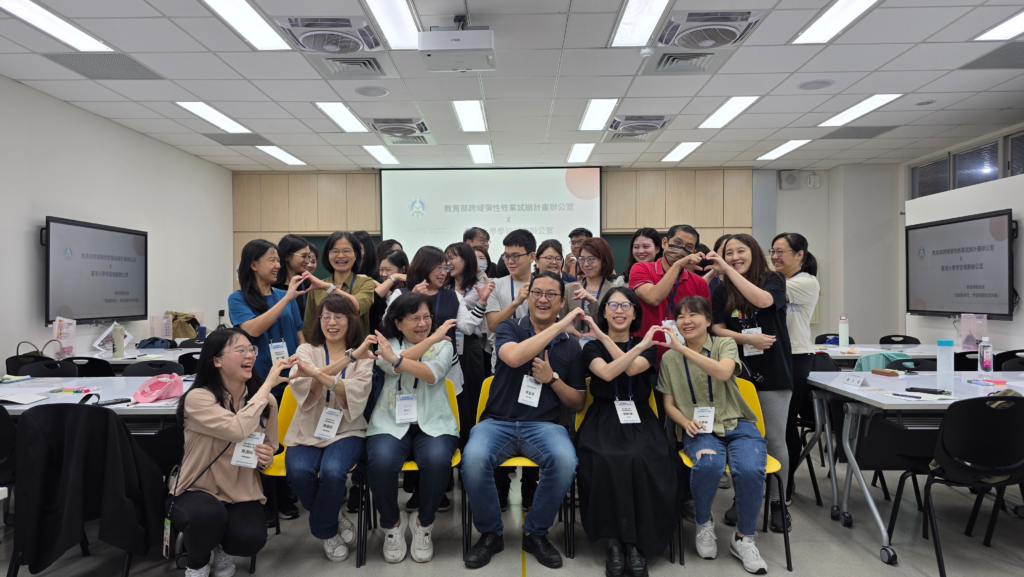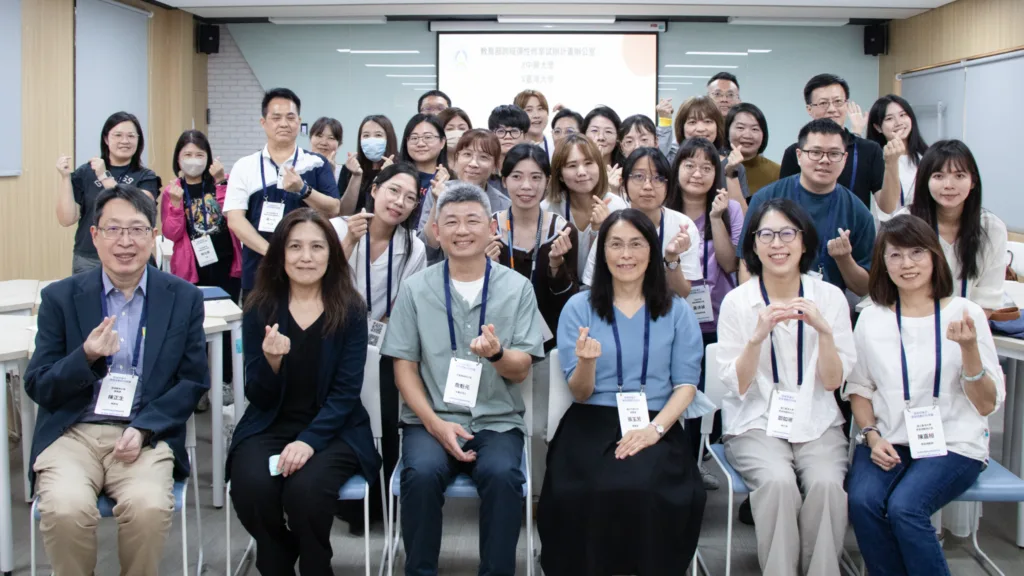
教育部跨域彈性修業試辦計畫與國立中興大學及國立臺灣大學學習規劃辦公室共同辦理「發掘那道光:學習規劃的技與藝」研習工作坊,分別於115年4月14日及4月16日於國立中興大學與國立臺灣大學舉辦兩場次活動,邀請各大學學習規劃師、從事學生引導工作之師長與相關從業人員報名參與,活動中透過實務分享與互動演練,交流學習規劃制度推動經驗與引導技巧。兩場活動共計吸引77位教育夥伴參與,其中中興場36人、臺大場41人。
本次工作坊由國立臺灣大學學習規劃辦公室執行長鄭如珊與學習規劃師陳嘉桓擔任主講,分享臺大自2021年成立學習規劃辦公室以來的制度發展歷程,以及第一線陪伴學生探索學習方向的經驗與方法。課程內容涵蓋學習規劃核心概念、會談流程架構、引導技巧、實務案例解析,以及透過點亮引導卡進行角色扮演與分組演練,協助與會者從理解理念到實際操作,逐步掌握學習規劃工作的核心精神。
4月14日於中興大學舉辦的場次,由跨域彈性修業試辦計畫主持人詹魁元教授與中興大學張玉芳教務長共同開場。詹魁元教授分享,近年學生對學習規劃與跨域探索的需求大幅增加,顯示學生雖然擁有高度潛力與多元想法,但在面對未來選擇時,仍需要更多支持與陪伴。他指出,學習規劃並非單純協助學生「轉換跑道」,而是透過對話與釐清,協助學生更理解自己的需求與方向,建立對未來的踏實感。
張玉芳教務長則表示,跨域與多元修業制度是高等教育的重要新方向,而學習規劃師制度更是極具挑戰且深具價值的一環。中興大學自制度建置初期即曾前往臺大交流學習,並高度肯定臺大團隊長期以來毫無保留地分享制度設計、實務經驗與引導工具,協助各校在推動過程中少走許多摸索的路。
4月16日於臺大的場次,則由跨域彈性修業試辦計畫共同主持人李孟學副教授開場。李孟學副教授以自身於工程教育與不分系領域的教學經驗分享,指出當代學生的學習樣態已與過去大不相同,教育工作者的角色也逐漸從「監督與檢查」轉向「引導與陪伴」。當學生能透過引導找到真正想學習的方向時,往往能自主突破原有框架與限制,而建立信任與連結,正是啟動學生學習動機的重要關鍵。
鄭如珊執行長於演講中進一步說明,臺大推動學習規劃制度的起點,來自校內新生調查中發現有相當比例學生在入學後仍對學習方向感到迷惘,因此開始思考如何建立更完整的支持系統,協助學生理解自身興趣、能力與學校資源之間的連結。學習規劃並非替學生做決定,而是透過引導與對話,協助學生梳理內在動機、探索學習可能性,進而找到適合自己的發展方向。
在實務方法上,鄭執行長也分享臺大近年逐步發展出的學習規劃培訓架構,包括以「概念性、資訊性、關係性」三大面向作為學習規劃師核心素養,並建立「FAST Model」與「點亮引導卡」等工具,協助規劃師在會談中辨識學生狀態、建立安全對話空間,並引導學生逐步形成具體行動方案。
陳嘉桓學習規劃師則從第一線會談經驗出發,介紹學習規劃七階段架構,包括建立關係、詢問主題、收集資訊、回饋聚焦、規劃評估、展開行動與回顧整合等步驟,說明如何透過正向且開放式的提問,協助學生整理想法、辨識需求,並將抽象的目標轉化為可執行的小步驟。不同學生在學習探索歷程中有不同特質與需求,因此學習規劃師需要理解學生背景、學校制度與相關資源,並在適當時機提供支持與轉介。
除講授內容外,兩場工作坊亦安排大量互動演練與小組討論。與會者透過「靈感卡」、「探索卡」等引導工具,實際模擬學生會談情境,練習提問、聚焦問題與規劃行動方案。現場交流熱絡,不同學校夥伴也藉此分享各自推動跨域學習與學生支持制度的經驗,激盪更多在地化實踐的可能。
隨著高等教育逐步朝向跨域、多元與自主學習發展,如何建立完善的學習支持與引導機制,已成為各校共同面對的重要課題。本次工作坊透過跨校交流與實務分享,不僅促進各校對學習規劃制度的理解,也深化教育現場對「陪伴學生探索學習方向」的實踐想像。未來,跨域彈性修業試辦計畫亦將持續串聯各校資源與經驗,共同培育具引導能力的學習規劃人才,協助學生在多元學習路徑中,看見自身潛能與未來方向。
The MOE Cross Disciplinary Bachelor Program, in collaboration with National Chung Hsing University and the National Taiwan University Academic Advising Office (AAO), hosted two sessions of the workshop “Discovering the Light Within: The Skills and Art of Learning Planning” on April 14 and April 16, 2026, at National Chung Hsing University and National Taiwan University.
The workshops brought together learning planners, faculty members, and professionals involved in student guidance and support services from universities across Taiwan. Through practical sharing sessions and hands-on interactive activities, participants exchanged ideas on advising practices, student support systems, and approaches to learning guidance. A total of 77 participants attended the two events, with 36 joining the Taichung session and 41 attending the Taipei session.
The workshops were led by Cheng Ju-Shan, Chief Executive of NTU’s Academic Advising Office (AAO), and Chen Chia-Huan, Academic Advisor at the office. Drawing on NTU’s experience since establishing the office in 2021, the speakers shared how the university has developed its learning planning system and supported students in exploring their academic interests and future pathways.
The program covered key concepts of learning planning, advising frameworks, facilitation and communication strategies, case studies, and role-playing activities using NTU’s “Light-Up Guidance Cards.” Through group exercises and simulations, participants experienced how learning planning conversations can help students clarify goals, discover motivations, and build actionable learning plans.
At the April 14 session hosted by National Chung Hsing University, Professor Chan Kuei-Yuan, Principal Investigator of the MOE Cross Disciplinary Bachelor Program, noted that student demand for learning guidance and interdisciplinary exploration has grown significantly in recent years. While students today are highly capable and full of ideas, many still need support when navigating future choices and academic pathways. He emphasized that learning planning is not about persuading students to change directions, but about helping them better understand themselves through dialogue and reflection.
Dean Yu-Fang Chang of National Chung Hsing University also highlighted that interdisciplinary and flexible learning pathways are becoming an important direction in higher education. She praised NTU for openly sharing its experience, advising tools, and institutional practices, which have helped other universities reduce the trial-and-error process when developing similar systems.
The April 16 session at NTU opened with remarks from Associate Professor Lee Meng-Hsueh, co-principal investigator of the program. Reflecting on his experience in engineering education and interdisciplinary programs, he shared that the role of educators is gradually shifting from “monitoring and checking” to “guiding and accompanying.” When students are encouraged to explore what truly interests them, they often become more motivated and willing to push beyond conventional boundaries. Building trust and meaningful connections, he noted, is essential to supporting student learning.
During her keynote, Cheng Ju-Shan explained that NTU began developing its learning planning system after campus surveys revealed that many first-year students still felt uncertain about their academic direction. This led the university to rethink how to create a stronger support structure that helps students connect their interests, abilities, and available learning resources. She stressed that learning planners are not there to make decisions for students, but to guide them in organizing their thoughts, exploring possibilities, and identifying meaningful pathways for themselves.
She also introduced NTU’s advisor training framework, which focuses on three core dimensions: conceptual understanding, informational knowledge, and relational skills. The workshop further showcased practical tools such as the FAST Model and the “Light-Up Guidance Cards,” which help advisors identify student needs, create safe and supportive dialogue spaces, and assist students in developing concrete action plans.
Drawing from frontline advising experience, Chen Chia-Huan introduced NTU’s seven-stage learning planning framework, including relationship building, identifying topics, information gathering, reflection and focus, planning and evaluation, taking action, and integration. She demonstrated how open-ended and positive questioning techniques can help students clarify their thoughts, recognize their needs, and transform abstract goals into achievable steps. She also emphasized that students have diverse backgrounds and challenges, making it essential for learning planners to understand institutional resources and provide timely support or referrals when needed.
In addition to lectures, both workshops featured extensive group discussions and practical exercises. Participants used tools such as “Inspiration Cards” and “Exploration Cards” to simulate advising conversations, practice questioning techniques, and design action plans for hypothetical student cases. The lively discussions also allowed universities to exchange experiences and explore how learning planning practices can be adapted to different campus contexts. As higher education continues moving toward interdisciplinary, flexible, and student-centered learning, universities are increasingly recognizing the importance of strong support and guidance systems. Through cross-campus collaboration and practical sharing, the workshops not only deepened participants’ understanding of learning planning, but also encouraged new ideas about how educators can better accompany students in exploring their learning journeys and future possibilities.