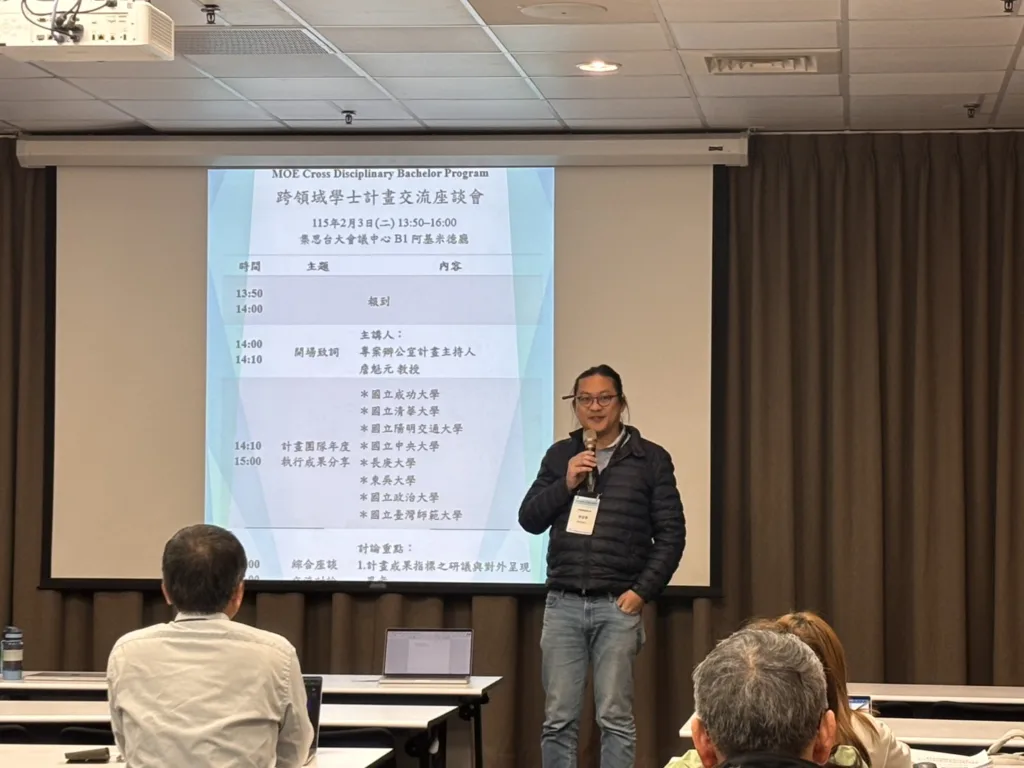
教育部跨域彈性修業試辦計畫於115年2月3日假集思台大會議中心舉辦「跨領域學士計畫交流座談會」,由專案辦公室計畫主持人詹魁元教授開場致詞,並邀集國立成功大學、國立清華大學、國立陽明交通大學、國立中央大學、長庚大學、東吳大學、國立政治大學及國立臺灣師範大學等八所計畫團隊進行年度執行成果分享與交流,共同探討跨領域學士制度推動經驗與未來發展方向。
本次交流會中,各校展現跨域彈性修業制度的多元推動成果。國立成功大學建立完善的校學士申請、審查與畢業預審流程,並建置線上申請與學習歷程追蹤系統,強化跨域學習制度化與數位化支持;同時透過彈性客製化的128學分校學士制度,促進學生跨院系探索與多元專業整合。國立清華大學成立「探索學習中心」,整合校內跨域資源並推動適性探索跨領域學士方案,透過探索課程、專責導師與學期檢核機制,系統性陪伴學生發展個人化跨域學習路徑,建構完整跨域探索生態系。
國立陽明交通大學推動「校自學學士學位」制度,透過模組化學程組合與雙主修機制,支持學生自主設計跨領域學位,並建置跨院學程推展與學習規劃雙軌支持系統,提供專業諮詢與制度化輔導。國立中央大學則以「領域專長模組」為核心建立校學士制度,提供超過61個跨域模組供學生彈性組合,並優化選課與輔導機制,逐步建構具職涯導向的跨域人才培育模式。
長庚大學透過學習規劃辦公室整合跨域學習支持機制,並由永續創新學院推動校學士制度,建立涵蓋醫學、工程、管理與人工智慧等領域的跨域專長模組,提供學生完整且彈性的跨域發展路徑。東吳大學則建置跨領域教育中心,整合全校21個學系與399門跨域課程,並導入AI課程媒合與職涯探索工具,協助學生依職涯目標規劃跨域學習藍圖。
國立政治大學校學士制度推動成果顯著,114學年度共43件申請並錄取26位學生,展現高度跨域學習參與度,並透過整合63位師長、建立AI學習助手與雙導師制度,強化學生自主學習與跨域實踐支持體系。國立臺灣師範大學則以學生為核心建構跨域學習生態系,透過調降必修學分、成立學習規劃辦公室及推動跨域專題與跨校修課機制,提升學生跨域整合與實務應用能力。
綜合座談中,各校亦針對計畫成果指標、制度優化與跨校合作等議題進行深入交流,展現跨域彈性修業制度逐步由制度建構邁向深化發展階段。透過本次交流座談,進一步促進各校經驗分享與資源連結,持續完善跨領域學士制度,培育具自主學習能力與跨域整合素養之新世代人才,推動我國高等教育邁向更具彈性與創新的發展模式。
The MOE Cross Disciplinary Bachelor Program held the “Interdisciplinary Bachelor Program Exchange Forum” on February 3, 2026, at GIS NTU Convention Center. The forum was opened by Professor Kui-Yuan Chan, Principal Investigator of the Program Office. Eight participating universities—National Cheng Kung University, National Tsing Hua University, National Yang Ming Chiao Tung University, National Central University, Chang Gung University, Soochow University, National Chengchi University, and National Taiwan Normal University—were invited to share their annual implementation achievements and exchange experiences, while jointly exploring the future development of interdisciplinary bachelor programs.
During the forum, participating universities showcased diverse implementation achievements in interdisciplinary flexible learning. National Cheng Kung University established a comprehensive application, review, and pre-graduation evaluation process, along with an online application and academic portfolio tracking system, strengthening institutional and digital support for interdisciplinary learning. National Tsing Hua University founded the Exploratory Learning Center to integrate interdisciplinary resources and implement structured exploratory learning pathways through dedicated advising, courses, and milestone evaluations.
National Yang Ming Chiao Tung University introduced the “Self-Designed Bachelor Program,” enabling students to independently design interdisciplinary degrees through modular curriculum combinations and dual-major structures, supported by dedicated academic advising and administrative support systems. National Central University established a specialization module-based interdisciplinary system, offering more than 61 interdisciplinary modules and optimizing course selection and advising mechanisms to support career-oriented interdisciplinary development.
Chang Gung University integrated interdisciplinary learning support through its Academic Planning Office and Sustainable Innovation College, developing interdisciplinary specialization modules across medicine, engineering, management, and artificial intelligence. Soochow University established a Center for Interdisciplinary Education and introduced AI-powered course matching and career exploration tools, helping students design personalized interdisciplinary learning pathways aligned with career goals.
National Chengchi University demonstrated strong engagement in its interdisciplinary bachelor program, receiving 43 applications and admitting 26 students in Academic Year 2025. The university further strengthened interdisciplinary learning support through faculty integration, AI learning assistants, and dual-mentor systems. National Taiwan Normal University built a student-centered interdisciplinary learning ecosystem by reducing required credits, establishing academic planning support services, and promoting interdisciplinary capstone projects and cross-university course opportunities.
During the panel discussion, participating universities engaged in in-depth dialogue on performance indicators, institutional optimization, and inter-university collaboration. The forum highlighted the continued evolution of interdisciplinary flexible study programs from institutional establishment toward deeper implementation. Through ongoing collaboration and knowledge exchange, the MOE Cross Disciplinary Bachelor Program will continue to enhance interdisciplinary learning systems, cultivate students with interdisciplinary integration and self-directed learning abilities, and advance Taiwan’s higher education toward a more flexible and innovative future.